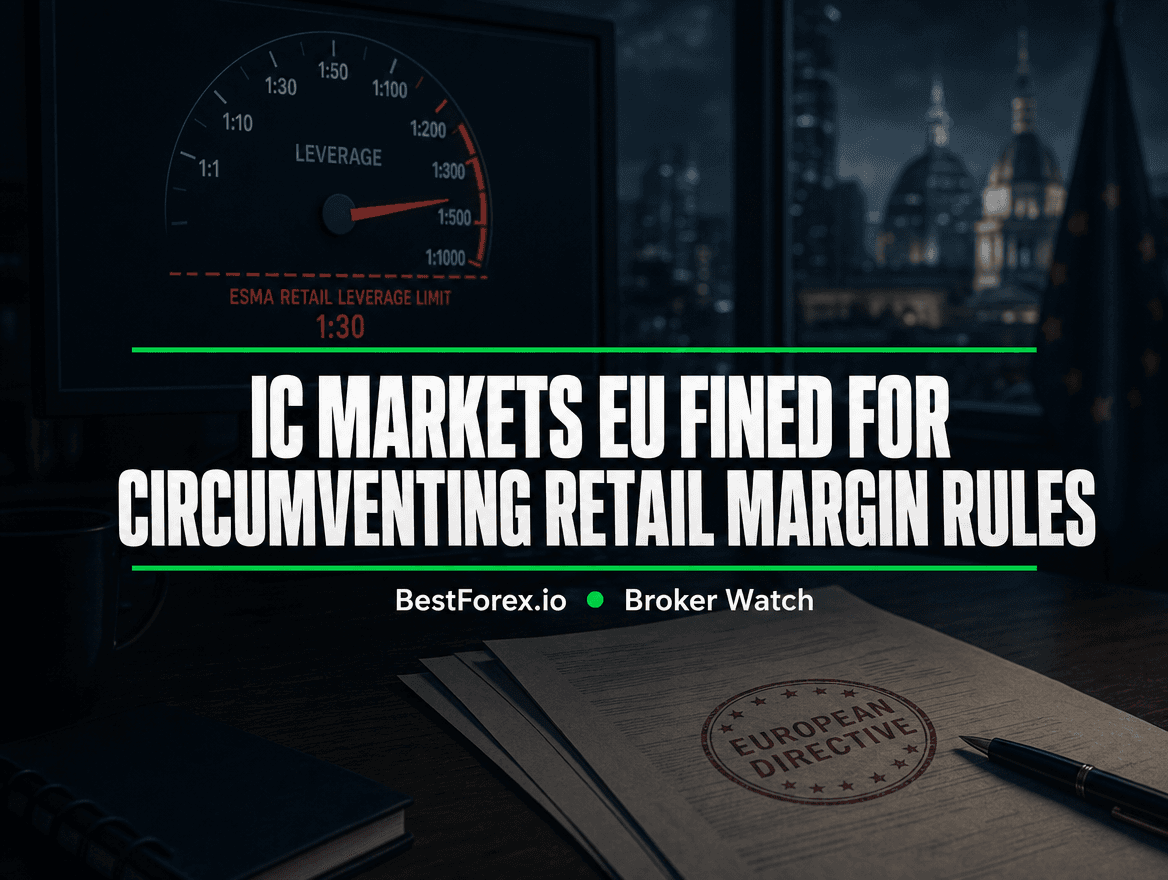
The Cyprus Securities and Exchange Commission has fined IC Markets (EU) Ltd EUR 200,000 after finding that the broker took part in activities that circumvented the initial margin protections European rules impose on contracts for difference sold to retail clients. The firm categorically denies the finding and has begun legal action against the regulator.
The decision was taken at a CySEC meeting on 1 July 2024. The regulator found a failure to comply with article 42 of European Regulation 600/2014, as set out in paragraph 5 of its own directive on the restriction of the marketing, distribution and sale of contracts for difference to retail clients. More precisely, CySEC said the company participated in activities that resulted in the circumvention of the requirements on the payment of initial margin protection.
What Initial Margin Protection Is
Initial margin protection is the mechanism that caps how much leverage a retail client in Europe can take on. It is the reason a European retail trader is held to modest leverage on a currency pair rather than the very high multiples advertised in less regulated markets. Circumventing it, in the regulator's view, is not a filing error. It goes to the heart of the protection regime that European authorities built after concluding that most retail clients lose money trading these products.
The rules derive from ESMA's 2018 product intervention measures, which capped leverage on major currency pairs at 30:1 for retail clients, with lower limits for other instruments. Those measures were eventually adopted into national law across EU member states. Cyprus implemented them through its own CFD directive, the instrument that CySEC relied on in its decision against IC Markets EU.
A Repeat, Not a First Offence
The most damaging element of the CySEC decision is not the size of the fine. It is the seventh factor the regulator listed in setting it. CySEC recorded that in 2021 the company committed the same violation, and that the present breach therefore amounted to repeated behaviour, despite the company having assured the regulator that it would take corrective measures.
The other factors CySEC weighed run in the same direction. It cited the seriousness of violations of this kind, the importance of firms fully complying with European market rules, and the particular seriousness of a licensed firm acting with the aim of circumventing restrictions that exist to protect investors. It noted the long duration of the offence, the financial strength of the company, and its conclusion that the firm had not ensured the protection of its customers' interests.
The Company Rejects It Entirely
IC Markets has not accepted any of this. In a statement, a spokesperson said the company categorically denies the basis of the decision and would rigorously pursue an appeal. The firm said CySEC had disregarded audited evidence and instead relied on information from a former employee who had been terminated for misconduct, and who it said had threatened the company with regulatory involvement while claiming personal connections inside the regulator.
The statement went further, arguing that the decision rested on speculation rather than facts and that the episode raised serious questions about the impartiality and integrity of the regulatory process. The company said it had commenced legal action against CySEC. None of those claims has been tested, and the fine stands unless and until an appeal succeeds.
Why This Case Is Separate From the Australian Class Action
It is worth being precise about which company this concerns. IC Markets (EU) Ltd is the Cyprus-licensed entity of the IC Markets group. It is a different company from the Australian entity facing a separate class action in the Federal Court of Australia over its sale of contracts for difference. The two matters are unconnected, and this CySEC decision deals only with the European business and the European margin rules.
BestForex.io View
What This Means for IC Markets EU Clients
The number to focus on is not EUR 200,000, which a broker of this size can absorb without difficulty. It is the word repeated. CySEC says the same violation occurred in 2021, that the firm promised corrective measures, and that it happened again anyway. IC Markets rejects the finding in unusually forceful terms and has gone to court, which is its right, and readers should weigh that denial seriously.
But margin limits are the one protection standing between a European retail trader and the leverage that empties accounts. A regulator alleging those limits were bypassed twice is not raising a technicality. The appeal may succeed. Until it does, the record shows a finding of repeated margin circumvention by one of the world's largest retail CFD brokers.
European retail clients of IC Markets EU should confirm that their accounts are subject to ESMA leverage limits and that no arrangement — whether through professional client reclassification or otherwise — has been used to expose them to higher leverage than EU rules permit for retail traders.
About the Company
About IC Markets EU
Regulator
CySEC (Cyprus, EU)
Action Type
Administrative Fine — Margin Circumvention
Penalty
EUR 200,000
Decision Date
1 July 2024
IC Markets (EU) Ltd is the Cyprus-licensed arm of the IC Markets group, one of the largest retail forex and contracts for difference brokers in the world by trading volume. It is authorised by the Cyprus Securities and Exchange Commission and serves clients across the European Economic Area under European rules, including the leverage limits that apply to retail clients.
In July 2024 CySEC imposed an administrative fine of EUR 200,000 on the company over the circumvention of initial margin protection requirements for retail CFD clients. The company denies the finding and has pursued legal action against the regulator. This decision is separate from the class action proceedings against the Australian entity of the IC Markets group.
Editor's note & source: Factual points are drawn from the CySEC decisions register. IC Markets EU has contested this decision and legal proceedings are ongoing. This article is not legal advice. Last updated: 27 July 2026.